Platform · Meridian
The operating system for strategic resources.
Every scene, signature, sample, assay, and decision lives as a linked object. Active learning decides what to measure next at every scale, Meridian tasks the measurement, from a satellite capture to a lab run, and every answer traces back to the evidence that produced it.
The object model
Every answer has a lineage.
Meridian holds the physical world as linked objects. A Passport field points to the assay that set it, the sample that assay ran on, the target that sample was taken to resolve, and the orbital signature that put the target on the map.
Scene
sensor · date · bands
Signature
class · strength · footprint
Target
rank · uncertainty · next action
Sample
site · depth · collector
Assay
instrument · method · result
Passport
fields · evidence · confidence
Simplified object model.
Sense · decide · act
It doesn't stop at the insight.
Fuse every tasked scene, signature, record, sample, and assay into one operating picture of the ground.
Active learning scores every possible next measurement, at every scale, by how much it would change the decision and by what it costs.
Task the satellite capture, issue the sampling order, queue the lab run, and update the answer when the result lands. Field work goes to people. Lab runs execute on their own.
The loop
Each measurement chooses the next one.
Meridian holds a belief about a physical system: what is there, how sure it is, and what that means for the decision. Before every measurement it asks one question. Which observation would change the decision most, for what it costs?
- 01 · LodestarOrbit. Meridian points hyperspectral satellites at the areas where a new capture would change the answer most, then fuses the scene with multispectral, radar, terrain, and legacy records.
- 02 · TraverseField. Active learning selects the sites and samples that reduce decision uncertainty fastest. Teams collect exactly those.
- 03 · CrucibleLab. The same rule designs each batch of experiments. Autonomous labs run the characterization and the chemistry: composition, mineralogy, species, extraction pathways.
- 04 · MeridianDecision. Results update the model and the ranking. You get an answer, its evidence, and the next measurement.
Active learning, all the way down
One rule at every scale.
Every measurement costs money and time: a satellite capture, a day in the field, a lab run. At each scale Meridian scores every candidate by expected information per cost, takes the best one, and learns from the result. The answer at one scale sets the priors for the next.
Where should the satellite look?
- Candidates
- Areas of interest
- Measurement
- Hyperspectral capture, 400 to 2500 nm
- Action
- Capture tasked over the AOI
Which rock is worth picking up?
- Candidates
- Sites in the captured scene
- Measurement
- Field sample
- Action
- Sample order issued
Which experiment runs next?
- Candidates
- Protocols and leach conditions
- Measurement
- XRF, ICP-OES, leach screen
- Action
- Batch queued, runs on its own
Scores are illustrative. Each bar is expected information per unit cost; the pick is measured, the result lands, and every score updates.
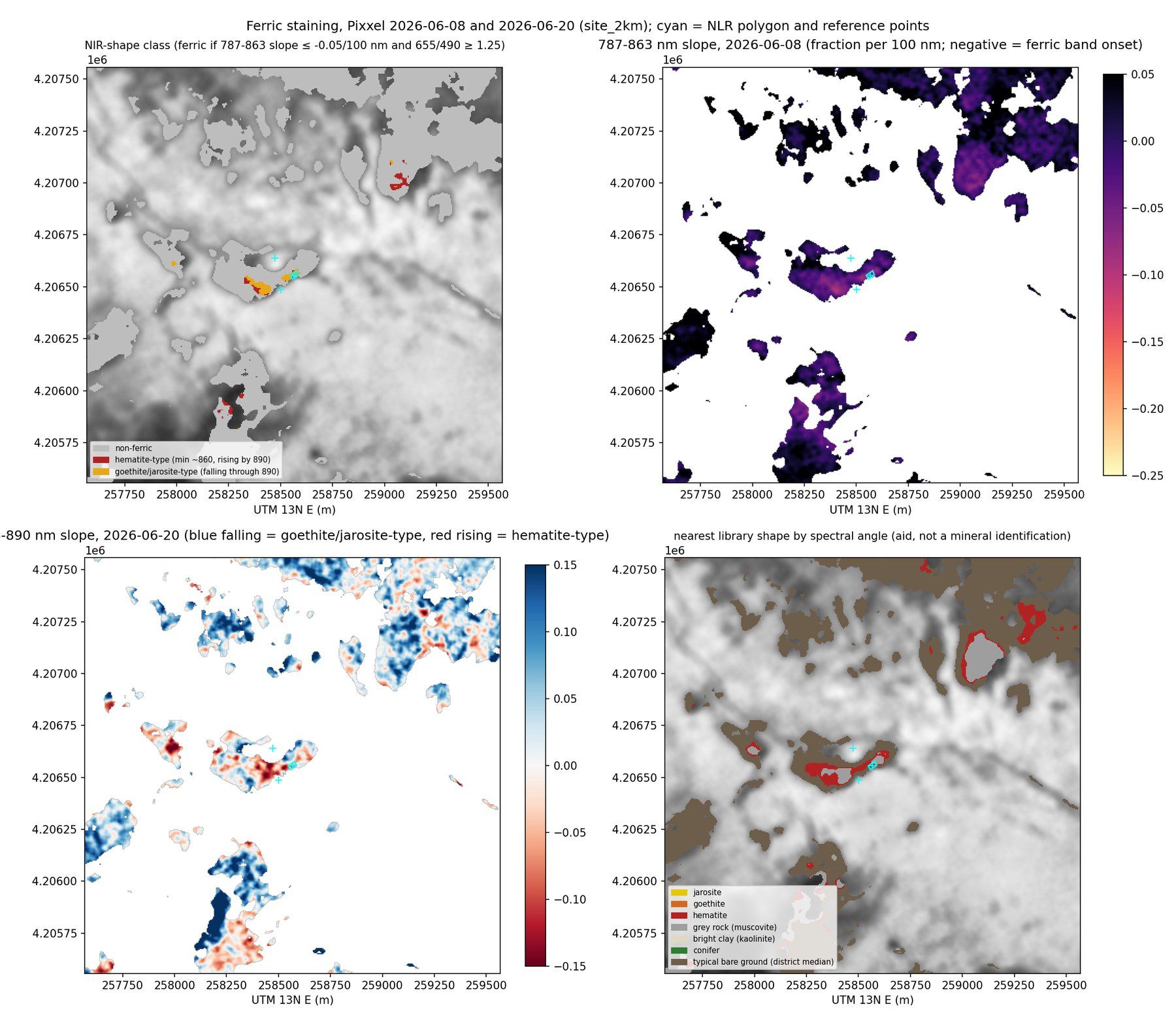
Thirteen bands see color. Hundreds see chemistry.
Sentinel-2 and Landsat give frequent, wide coverage. PRISMA and EnMAP add hundreds of narrow bands, enough to resolve the absorption features that separate one mineral from another. Radar adds structure and sees through weather.
Lodestar does not wait for the next scene. Meridian tasks hyperspectral captures over the areas of interest where new data would change the answer most, and Lodestar turns them into ranked signatures: iron oxides, clays, chlorophyll, turbidity, and the targets that matter to a program.
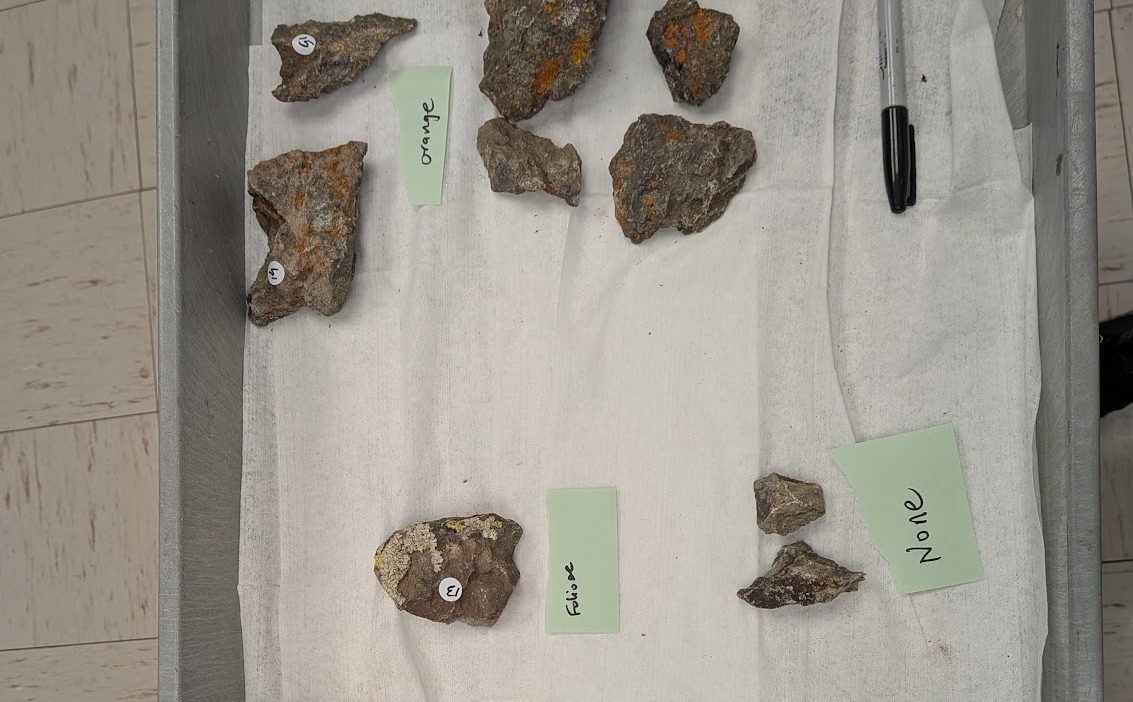
Samples only what matters.
A field campaign is the most expensive measurement in the loop. Traverse ranks candidate samples by expected reduction in decision risk, not by convenience or coverage. A team of two walks one route and brings back the rocks that change the answer.
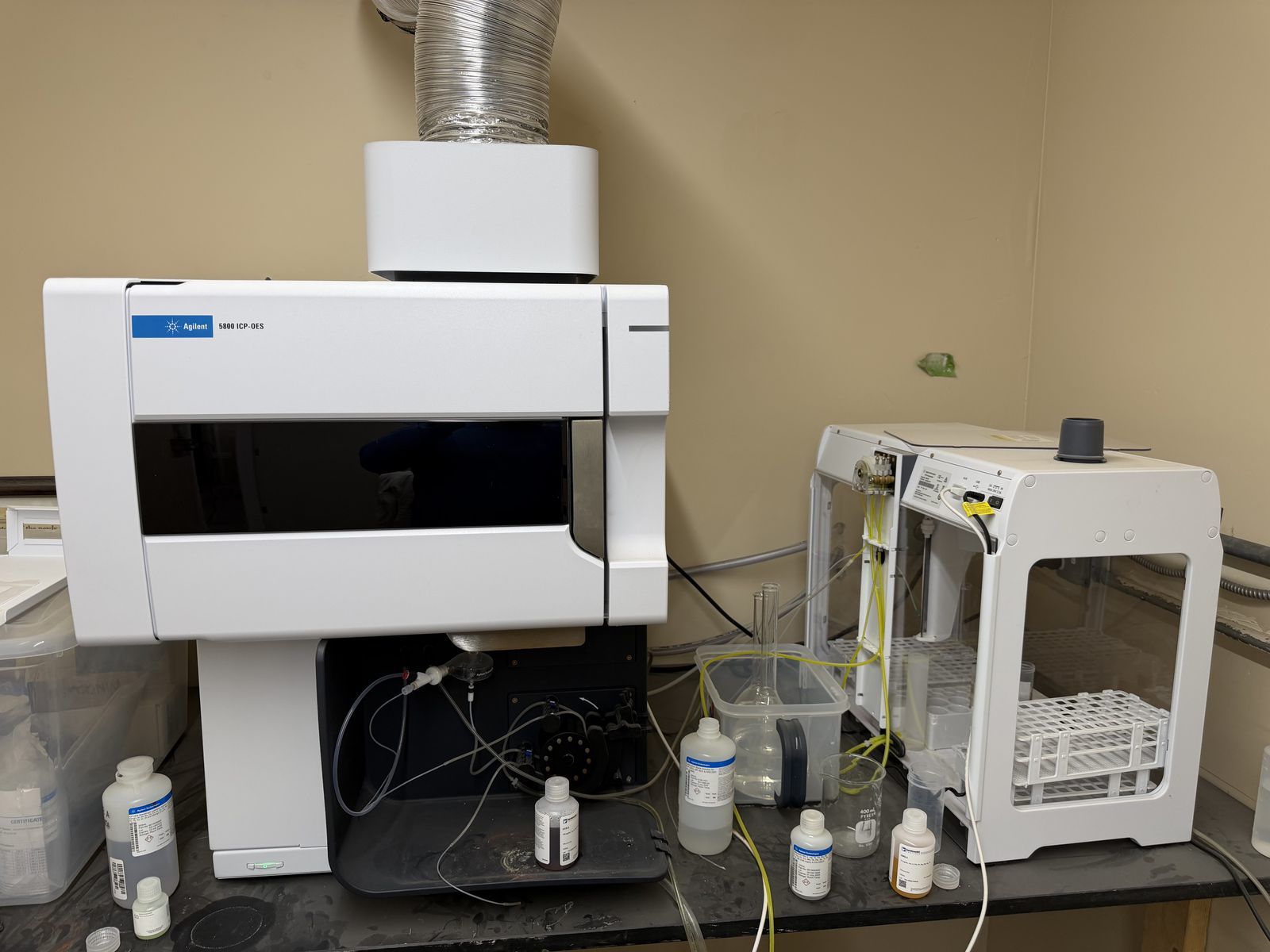
Runs the chemistry at scale.
Coactive's own characterization lab in Ouray, Colorado, plus autonomous cells at PNNL and NLR. Liquid handlers run the chemistry in parallel, instruments read every condition, and Meridian designs the next round. Sample characterization takes days and weeks instead of months.
What carries over
Reused, configured, and expert.
Meridian and the loop.
The model, the sensing pipeline, the selection policy, and the evidence trail. They improve with every site and every sample they touch.
The question.
Target definitions, priors from existing data, sensors in scope, the validation protocol, and the decision the output has to support.
The ground truth.
Field campaigns, lab characterization, and interpretation. This is where Coactive's scientists spend their time. It is not automated away.
Evidence by maturity
| Capability | Validation | Status |
|---|---|---|
| Critical-mineral screening | Legacy assays; field follow-up | |
| Orbit-field-lab loop | Physical assays at Camp Bird and Revenue-Virginius | Pilot |
| Autonomous lab cells | Ouray lab; CICERO campaigns at PNNL | |
| Aquatic invasive species | Field verification, Caddo Lake | In development |
| HAB and water quality | In-situ validation with partners | In development |
| Decision-focused active learning | Preprints and benchmarks | Research |
The company
Built across AI, field science, and experimentation.
Machine-learning researchers, geoscientists, and experimentalists in Seattle, Washington, DC, Ouray, and Reno. National laboratories and Thorin Resources, owner of the permitted Camp Bird and Revenue-Virginius mines, are partners.
Contact
Bring a resource and a decision.
We reply with whether the area is observable, what a first screening would cover, and what it would not claim.